Integrating Books Floral Cutting Files into Creative and Commercial Workflows
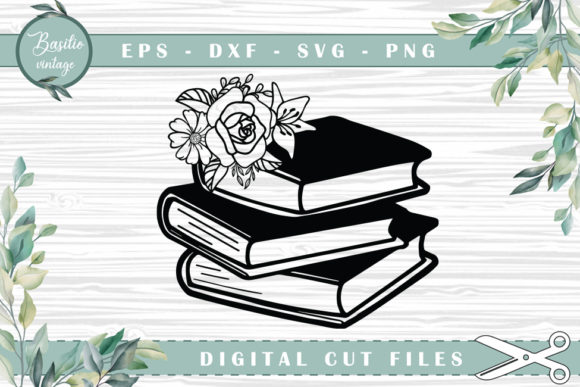
In the landscape of digital fabrication and custom merchandise creation, asset quality directly dictates production efficiency. Books Floral Cutting Files represent a specific category of digital design assets tailored for creators who merge literary aesthetics with botanical elements. These files are not merely decorative images; they are functional vector data sets intended for precision manufacturing. Whether you are a small business owner producing niche apparel, an educator creating tactile learning materials, or a hobbyist personalizing gifts, understanding the technical specifications and workflow integration of these files is essential for consistent results.
The value of this asset lies in its versatility across different stages of a project. From the initial planning phase where compatibility is assessed, to the post-production stage where quality control ensures client satisfaction, these digital illustrations serve as the foundational blueprint. Success depends less on artistic ability and more on technical preparation, file management, and understanding how vector formats interact with various output devices.
Technical Specifications and Asset Management
Before initiating any cutting or printing task, it is necessary to understand exactly what is being acquired. When you obtain Books floral cutting files, you are receiving a comprehensive package of editable vector and raster formats. The inclusion of SVG, PNG, DXF, and EPS formats ensures interoperability across the fragmented landscape of design software and hardware. This multi-format approach eliminates the need for third-party conversion tools that often degrade line quality or introduce node errors.
- SVG: Scalable Vector Graphics are the industry standard for Cricut Design Space and Silhouette Studio. They retain mathematical path data, allowing for infinite resizing without pixelation.
- PNG (300 PPI): High-resolution raster files suitable for sublimation, direct-to-garment printing, or as reference layers during the weeding process.
- DXF: Drawing Exchange Format is crucial for users of the free version of Silhouette Studio, which does not support SVG imports natively.
- EPS: Encapsulated PostScript files provide compatibility with professional vector suites like Adobe Illustrator or CorelDRAW for advanced editing.
File organization begins immediately upon download. All assets are compressed in Winzip to preserve directory structure and reduce transfer size. A critical step in your intake workflow is unzipping this archive before attempting to import. Cutting software cannot read inside a zipped folder; failing to extract the files is the most common cause of "unsupported format" errors. Establish a dedicated library folder on your local drive or cloud storage system specifically for these assets. Consistent naming conventions and tagging within your digital asset management system will save significant time when searching for specific designs months after purchase.
Software Compatibility and Pre-Production Checks
Efficiency in production relies on seamless communication between digital files and cutting hardware. Books Floral Cutting Files are engineered for broad compatibility, but verification is part of a professional workflow. The primary ecosystems include Cricut Design Space, Silhouette Studio, Sure Cuts A Lot, and CanvasWorkspace. While the SVG format is universally accepted by modern machines, legacy systems or specific firmware versions may require DXF or EPS alternatives.
During the pre-production phase, open the file in your chosen software to inspect the node structure. Clean vectors should have smooth curves and minimal anchor points. If the design appears jagged or causes the software to lag, it may indicate excessive complexity. Because these files are provided without watermarks, you receive the clean, production-ready version immediately. However, this also means there is no visual guide overlaid on the canvas. Always verify the dimensions against your material constraints before sending to the machine. A design intended for a book cover might be too large for a mug wrap; scaling must be done proportionally to maintain stroke width integrity.
For users planning to convert these vectors for embroidery, additional preparation is required. Cutting files define outlines, whereas embroidery requires stitch paths. While the EPS or SVG provides the perfect template for digitizing, the conversion process itself alters the nature of the file. Understanding this distinction prevents frustration when a cut file does not automatically translate to a stitch file without specialized digitizing software.
Practical Applications Across Material Types
The utility of Books floral cutting files extends beyond paper crafting. Integrating these designs into diverse product lines requires adapting your technique to the substrate. The following applications demonstrate how to leverage these files in practical scenarios:
Vinyl and Heat Transfer Applications
When cutting for clothing, the choice between adhesive vinyl and heat transfer vinyl (HTV) dictates the workflow. For HTV, remember to mirror the design horizontally in your software before cutting. The intricate details typical of floral and book-themed designs require precise blade calibration. Perform a test cut on scrap material to ensure the blade penetrates the vinyl layer without scoring the carrier sheet. Excessive pressure can damage delicate serif fonts or thin vine stems, while insufficient pressure makes weeding impossible. After application, use a heat press rather than a household iron for commercial products to ensure wash durability and even adhesion across complex floral patterns.
Glass and Hard Surface Etching
Cutting these files for glass panes or drinkware involves using adhesive vinyl as a resist mask. The high-quality vector paths ensure crisp edges for etching cream application. When working with curved surfaces like tumblers, consider segmenting the design or using specialized wrapping techniques to prevent distortion. The 300 PPI PNG file can serve as a placement guide if you are combining etched elements with UV printing or sublimation, ensuring alignment between multiple decoration methods.
Fabric and Embroidery Integration
As noted, these files can be converted for embroidery. Use the vector outlines as a tracing guide in your digitizing software to create satin stitches for borders and fill stitches for floral centers. This hybrid approach allows for mixed-media projects where cut vinyl outlines frame embroidered fills. However, always test the converted design on the actual fabric weight you intend to use. Stabilizer requirements for a dense floral book design differ significantly from simple text, and improper stabilization can lead to puckering that ruins the precision of the original vector art.
Editing, Modification, and Quality Assurance
While Books Floral Cutting Files arrive as polished assets, customization is often necessary to fit specific project parameters. You may need to remove elements, change colors, or combine multiple designs. Using native vector software like Illustrator or Inkscape provides the most control. When editing, maintain the original aspect ratio unless intentional distortion is desired. Adding new nodes should be done sparingly to keep file sizes manageable and cutting times efficient.
A vital operational caveat concerns modifications: there is no guarantee regarding the quality of designs once altered, edited, or converted. This places the responsibility for quality control squarely on the user. When you modify a path, you risk introducing open nodes or overlapping lines that cause cutting failures. Implement a verification protocol:
- Duplicate the original file before making any changes to preserve a master copy.
- After editing, run a "clean up" or "optimize" function within your vector software to merge stray points.
- Perform a physical test cut or stitch-out after significant alterations.
- Document successful settings for future reference to maintain consistency across batches.
This disciplined approach mitigates the risks associated with customization. It acknowledges that while the source asset is high-quality, the integrity of the final product depends on the skill and care applied during the modification process. For business owners, this QA step is non-negotiable to prevent waste and customer returns.
Streamlining Workflow for Long-Term Efficiency
Incorporating Books floral cutting files into a sustainable routine involves more than just downloading and cutting. It requires building a system. Create template projects in your cutting software with pre-set material settings for your most-used substrates. When you import a new book-themed floral design, simply drop it into the existing template to bypass repetitive setup steps. Batch processing similar designs reduces machine calibration time and increases throughput.
Furthermore, consider the licensing and usage rights associated with your files. Ensure your commercial license covers the intended scale of production. Organizing files by license type alongside technical format prevents accidental misuse. For educators and librarians using these files for non-commercial decor or teaching aids, maintaining a separate "personal/educational" library simplifies compliance tracking.
Ultimately, the effectiveness of digital cutting assets is measured by their ability to transition smoothly from screen to physical object. By respecting technical specifications, preparing files correctly, and adhering to rigorous quality control during modification, creators can maximize the return on investment from Books Floral Cutting Files. Whether producing a single bespoke gift or a run of retail merchandise, the difference between amateur and professional output lies in these procedural details. Treat the digital file as a precision component in your manufacturing process, and the resulting craftsmanship will reflect that discipline.