Evaluating Witch Pot Floral Cutting Files for Digital Crafting Projects
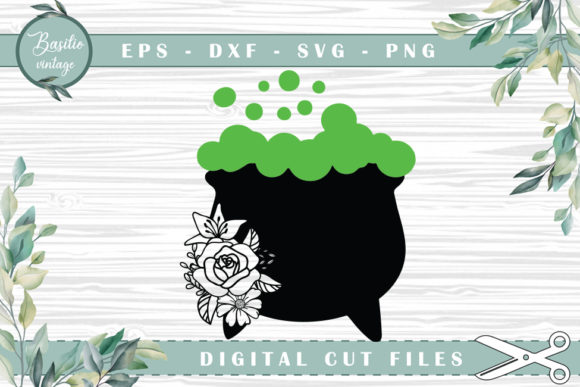
When selecting digital assets for seasonal or botanical crafting projects, the technical specifications of the file are often just as important as the aesthetic design. Witch pot floral cutting files represent a specific niche within the digital design marketplace, combining dark academia or cottagecore aesthetics with functional vector geometry. For crafters aged 20 to 50 who manage personal studios or small businesses, understanding the distinction between these specialized files and generic clip art is essential for production efficiency. These files are not merely static images; they are engineered datasets intended for mechanical reproduction through vinyl cutters, laser engravers, and embroidery machines.
The primary value proposition of witch pot floral cutting files lies in their versatility across multiple fabrication methods. Unlike standard raster graphics found on stock photo sites, these designs are delivered as editable vectors. This distinction matters significantly when comparing options for merchandise creation. A high-resolution PNG might suffice for sublimation printing, but it fails when a user attempts to cut adhesive vinyl for a glass pane or iron-on transfer for clothing. The inclusion of SVG, DXF, and EPS formats ensures that the design maintains mathematical precision regardless of scaling, while the 300 PPI PNG serves as a high-fidelity reference or print-layer component.
Technical Specifications and Software Compatibility
A critical decision factor when evaluating any digital cutting file is ecosystem compatibility. Witch pot floral cutting files are structured to bridge the gap between proprietary hardware software and professional design suites. The SVG format is generally the industry standard for Cricut Design Space and Silhouette Studio (Designer Edition and above), allowing for immediate manipulation of nodes and layers without conversion artifacts. Conversely, the DXF format acts as a universal translator for older Silhouette Basic Edition users and various industrial cutting plotters that do not natively support SVG imports.
For users operating outside the hobbyist ecosystem, the inclusion of EPS files provides necessary interoperability with Adobe Illustrator, CorelDRAW, and Affinity Designer. This is particularly relevant for creators who need to modify the witch pot floral design before sending it to a cutter. When comparing this package to single-format alternatives, the multi-format approach reduces the risk of purchasing an unusable asset. However, users must recognize that "editable" implies different capabilities across platforms. While Cricut Design Space allows for basic resizing and color changes, true node editing requires vector-native software. Understanding this limitation prevents frustration when attempting complex modifications within entry-level cutting software.
Resolution and Print Quality Standards
The specification of 300 PPI (pixels per inch) for the included PNG file is a non-negotiable benchmark for hybrid projects. Many budget-friendly digital downloads offer 72 or 96 PPI images, which appear pixelated when printed at physical scale. For crafters planning to use the witch pot floral design for printable vinyl or direct-to-garment applications, verifying this resolution is vital. The 300 PPI standard ensures that if the vector lines are converted to raster for texture overlay or shadow effects, the output remains crisp. This specification places these files in a professional tier compared to web-optimized graphics, making them suitable for commercial product photography and physical goods alike.
Comparing Application Methods: Vinyl, Glass, and Embroidery
The utility of witch pot floral cutting files extends beyond simple paper crafting, yet each application method presents unique tradeoffs. When cutting for vinyl to iron onto clothing, the complexity of the floral details within the pot design becomes a limiting factor. Intricate botanical elements may require weeding tools and significant patience. Users comparing this design against simpler silhouettes should assess their own skill level and equipment blade sharpness. If the goal is high-volume apparel production, highly detailed witch pot florals may increase labor time per unit compared to bold, minimalist alternatives.
Glass pane applications offer a different set of considerations. Adhesive vinyl on glass relies on negative space and contrast. The witch pot aesthetic often involves dense line work, which can create visual clutter on transparent surfaces. In this context, these files compare favorably to solid shapes because the intricate lines allow light to pass through, maintaining visibility. However, users must consider the permanence of the application. Unlike fabric, glass does not forgive alignment errors easily. The precision of the DXF/SVG cut lines is advantageous here, but the design density requires careful planning regarding placement and backing color.
Embroidery conversion represents the most technically demanding use case. While the product description notes that files can be converted for embroidery, users must understand that cutting files are not digitized embroidery files. Converting a vector witch pot floral design into stitch data requires specialized digitizing software and expertise. Auto-digitizing features often fail with complex floral overlaps common in this style. Compared to purchasing pre-digitized embroidery files, converting these cutting files offers customization freedom but demands a higher skill ceiling. For those without digitizing experience, these files serve best as templates for manual tracing rather than direct machine input.
File Management and Post-Purchase Workflow
Digital asset management is frequently overlooked during the evaluation phase. Witch pot floral cutting files are delivered in a compressed Winzip archive. This necessitates a post-download workflow step that differs from instant-access cloud libraries. Users accustomed to direct downloads from marketplaces like Etsy or Creative Fabrica must ensure they have extraction software installed. Failure to unzip files is the most common cause of "file not found" or "corrupt file" errors in cutting software. This compression method preserves file integrity during transfer but adds friction for users working on tablets or Chromebooks where file system access is restricted.
Furthermore, the assurance that files arrive without watermarks is a significant quality-of-life feature for professional users. Watermarked preview images serve a legal purpose, but receiving clean source files eliminates the need for manual cleanup or background removal. When comparing vendors, verify that the "no watermark" guarantee applies to all included formats. Some providers remove watermarks from PNGs but leave them embedded in SVG layers, which disrupts cutting paths. The explicit confirmation regarding clean files for witch pot floral cutting files suggests a vendor awareness of professional workflow requirements.
Understanding Modification Limitations and Guarantees
A crucial aspect of evaluating digital design resources is understanding the boundaries of vendor support. The statement that there is no guarantee on quality once designs are altered, edited, or converted is standard industry practice, yet it carries specific weight for this product category. Vector files rely on precise anchor points; aggressive simplification or auto-tracing can introduce jagged edges or open paths that cause cutting machines to malfunction. When users modify witch pot floral cutting files, they assume responsibility for the geometric integrity of the design.
This limitation influences the buy-decision for less experienced users. If a crafter anticipates needing to significantly resize or reshape the floral elements, they should test the file's resilience in their preferred software before committing to large-scale production. Compared to subscription services that offer unlimited re-downloads or customer service adjustments, standalone file purchases place the burden of quality control on the user. This tradeoff is acceptable for confident designers who value ownership and offline access, but it may deter beginners who require ongoing technical support.
Decision Factors: When to Choose Specialized Botanical Vectors
Selecting witch pot floral cutting files over generic alternatives depends largely on project specificity and long-term asset value. These files are the optimal choice when the project demands a cohesive thematic element that bridges folklore aesthetics with modern fabrication techniques. Generic floral vectors often lack the specific stylistic markers—such as cauldron integration or specific herbaceous textures—that define this niche. For creators building a branded product line around autumnal, gothic, or apothecary themes, the semantic accuracy of the design outweighs the convenience of broader categories.
However, these files may not be the right fit for every scenario. If the primary goal is rapid prototyping with minimal weeding, simpler silhouette files would be more efficient. Similarly, if the end product is strictly embroidered and the user lacks digitizing skills, purchasing native PES or DST files is a more practical investment. The witch pot floral cutting files excel in mixed-media environments where the same design asset must serve multiple purposes—from vinyl decals to printed packaging. Evaluators should weigh the upfront cost against the potential for cross-platform utilization. When the design serves as a foundational element across three or more fabrication methods, the multi-format package delivers superior ROI compared to purchasing single-use assets.
Ultimately, the decision rests on aligning technical capabilities with creative intent. Witch pot floral cutting files offer a robust foundation for intermediate to advanced crafters who understand vector manipulation and material constraints. By verifying software compatibility, acknowledging modification responsibilities, and realistically assessing application complexity, users can integrate these digital illustrations into their workflow with confidence. The presence of high-quality SVG, DXF, EPS, and PNG formats provides the necessary flexibility for professional results, provided the user approaches the file with appropriate technical preparation and realistic expectations regarding post-editing performance.