Evaluating Peace Sign Floral Cutting Files for Creative Projects
Digital crafting has transformed how makers approach personalized design, allowing for precise customization across a wide variety of mediums. Among the diverse array of available digital assets, Peace Sign Floral Cutting Files represent a specific niche that combines retro symbolism with organic botanical aesthetics. For crafters evaluating whether this particular design asset aligns with their current project needs, understanding the technical specifications, practical applications, and inherent limitations is essential. This evaluation focuses on the functional aspects of these files to help users make informed decisions regarding compatibility, quality, and intended use.
Understanding the Digital Asset Composition
Peace Sign Floral Cutting Files are not physical products but rather digital illustrations provided in editable formats. When acquiring these assets, users typically receive a compressed Winzip archive containing multiple file types designed to maximize software compatibility. The standard package includes SVG, PNG, DXF, and EPS formats. Each format serves a distinct purpose within the digital fabrication workflow. The SVG and DXF files are vector-based, meaning they utilize mathematical paths rather than pixels, allowing for infinite scaling without loss of fidelity. These are the primary formats used by cutting machines. The PNG file is generally provided at 300 PPI (pixels per inch), offering a high-resolution raster image suitable for sublimation, print-then-cut features, or digital mockups. The EPS format ensures compatibility with professional vector editing software like Adobe Illustrator or CorelDRAW for users who require advanced manipulation capabilities.
A critical aspect of evaluating this product is verifying software compatibility. These files are engineered to function with industry-standard cutting software, including Cricut Design Space, Silhouette Studio, Sure Cuts A Lot, and Canvas Workspace. However, compatibility can vary based on software versions and subscription tiers. For instance, users of the basic free version of Silhouette Studio may need to rely on the DXF file, whereas Designer Edition users can import SVGs directly. Confirming that your specific software ecosystem supports the provided file types is a necessary first step before purchase or download.
Practical Applications and Material Versatility
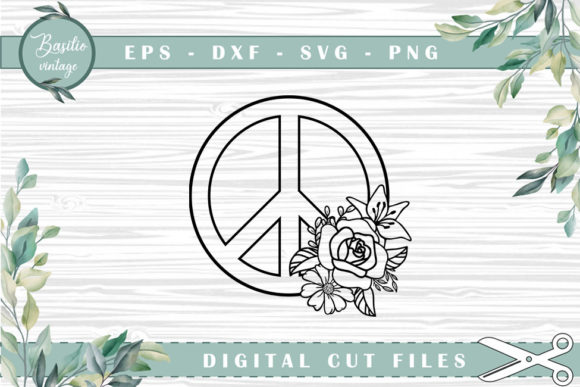
The primary value proposition of Peace Sign Floral Cutting Files lies in their versatility across different substrates. The design is optimized for vinyl cutting, making it a strong candidate for apparel customization. When cut from heat transfer vinyl (HTV) or iron-on material, the floral elements add a softer, more intricate detail to the bold geometry of the peace sign. This contrast works effectively on t-shirts, tote bags, and denim jackets. Beyond fabric, the design translates well to adhesive vinyl for hard surfaces. Users frequently apply these cuts to glass panes, water bottles, and laptop decals. The vector nature of the file ensures that fine floral details remain crisp even when scaled down for smaller items like tumblers or keychains.
For makers interested in textile arts beyond vinyl, these files offer potential for machine embroidery conversion. While the download provides cutting files rather than digitized embroidery patterns, the clean vector lines serve as an excellent template for manual digitizing or auto-digitizing software. This allows embroiderers to create stitched patches or direct-to-garment designs that match their vinyl projects. However, this application requires intermediate to advanced skills; the file itself does not contain stitch data, only the visual outline.
Technical Considerations and Workflow Requirements
Evaluating digital cutting files requires an honest assessment of technical requirements and post-download workflows. Upon acquisition, the files will be compressed in a Winzip archive. Users must have unzipping software installed on their device to access the contents. This is a non-negotiable prerequisite; mobile devices or tablets without file management capabilities may struggle with this step. Furthermore, while preview images often display watermarks to protect intellectual property, the actual downloaded files will be clean and watermark-free. Makers should expect the final output to differ visually from the listing photos solely in this regard.
File integrity and modification present another layer of consideration. The provider specifies that there is no guarantee regarding the quality of the designs once they are altered, edited, or converted. This is a standard industry disclaimer that carries significant weight for evaluators. If you intend to heavily modify the design—such as separating the flowers from the peace sign, reshaping nodes, or converting to embroidery—the structural integrity of the vector paths may be compromised depending on your skill level and software. Users seeking a "plug-and-play" solution should be comfortable using the design exactly as provided. Those planning extensive modifications must accept the risk that node counts may increase, cut lines may become jagged, or layers may separate unexpectedly during the editing process.
Assessing Fit: When to Choose This Design
Peace Sign Floral Cutting Files are a strong fit for specific project profiles. They are ideal for creators focusing on bohemian, retro, or nature-inspired themes where the juxtaposition of symbolic geometry and organic florals creates visual interest. The design is particularly effective for mixed-media projects where consistency across different production methods is desired; for example, creating matching vinyl decals and embroidered patches for a market stall. The inclusion of high-resolution PNGs also benefits sellers who need professional mockups for e-commerce listings without having to photograph physical prototypes.
Additionally, the multi-format delivery makes this asset suitable for makers with evolving toolsets. A crafter who currently uses a Cricut but plans to upgrade to professional design software later will find long-term value in the included EPS and SVG files. The 300 PPI resolution of the PNG also future-proofs the asset for print applications, ensuring it remains usable if the maker expands into sticker production or stationery design.
When Alternatives May Be Preferable
Despite their versatility, these files are not universally optimal. Evaluators should consider alternatives in several scenarios. First, if your primary goal is machine embroidery and you lack digitizing skills, purchasing a pre-digitized embroidery file specifically formatted for your machine hoop size is a more practical choice. Converting a cutting file to embroidery introduces variables in stitch density and underlay that automated converters often handle poorly, potentially resulting in thread breaks or puckering.
Secondly, if you require commercial licensing for mass production, you must verify the specific license terms associated with these Peace Sign Floral Cutting Files. Many digital cutting files are restricted to personal use or limited small-business sales. If your business model involves high-volume manufacturing or selling the digital file itself, you may need to source assets with extended commercial licenses or hire a designer for exclusive rights.
Finally, users working exclusively with raster-based workflows or low-resolution printing may find the vector emphasis unnecessary. Conversely, those requiring extremely complex, multi-layered mandala designs might find a simple peace sign floral hybrid too minimalist. It is vital to compare the complexity of this design against the capabilities of your cutting machine; older machines or dull blades may struggle with the intricate interior cuts of floral details, whereas simpler silhouettes would yield higher success rates.
Making the Final Decision
Selecting the right digital asset is a balance between creative vision and technical reality. Peace Sign Floral Cutting Files offer a robust combination of format variety and aesthetic appeal for makers operating within standard vinyl and print ecosystems. The provision of SVG, PNG, DXF, and EPS formats covers the vast majority of hobbyist and prosumer needs. However, the decision should ultimately hinge on your willingness to manage file extraction, your acceptance of modification risks, and the alignment of the design style with your target audience. By weighing these objective factors against your specific project parameters, you can determine whether this digital illustration serves as a valuable addition to your creative library or if alternative resources would better support your production goals.