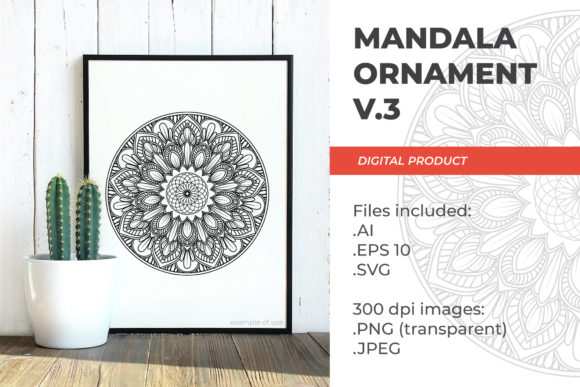
Mandala Floral Vintage V.3: Technical Specifications and Creative Applications for Digital Ornament Assets
The intersection of traditional artistic motifs and modern digital fabrication requires assets that bridge the gap between aesthetic heritage and technical precision. The Mandala Floral Vintage V.3 collection represents this synthesis, offering a comprehensive suite of vector and raster files designed for high-fidelity reproduction across physical and digital mediums. Unlike standard clip art, this digital product is engineered with production workflows in mind, providing creators with the mathematical flexibility needed for everything from microscopic laser engraving to large-format textile printing. Understanding the specific characteristics of these file formats and their practical applications is essential for professionals and hobbyists aiming to maximize the utility of vintage ornamental design.
Vector Architecture and Scalability in Production Environments
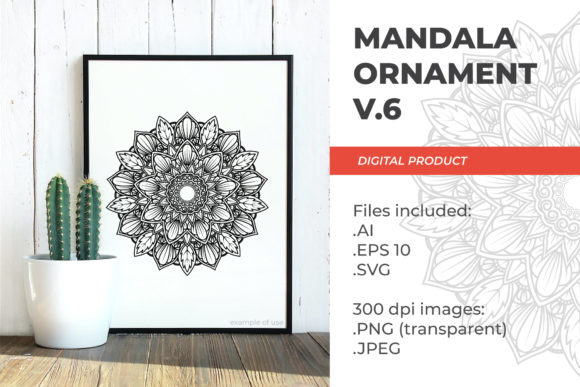
The core value of the Mandala Floral Vintage V.3 asset pack lies in its inclusion of industry-standard vector formats, specifically .AI (Adobe Illustrator) and .EPS (Encapsulated PostScript). These formats differ fundamentally from pixel-based imagery because they utilize mathematical paths rather than fixed grids of color. For designers working on projects where dimensions are fluid, such as branding or environmental graphics, this distinction is critical. A mandala design intended for a business card can be scaled up to cover a billboard without any loss of edge definition or introduction of pixelation artifacts.
This scalability extends directly into manufacturing processes. In CNC routing and wood carving, toolpaths are generated from vector lines. The clean curves found in the .AI and .EPS files of this collection allow CAM software to calculate efficient cutting routes, reducing machine time and preventing jagged edges that often result from tracing low-resolution raster images. Similarly, in the tattoo industry, artists rely on crisp line work for stencils. Vector files ensure that the intricate floral details remain sharp when resized to fit different anatomical placements, maintaining the integrity of the vintage aesthetic regardless of the final scale.
Raster Optimization for Direct-to-Garment and Sublimation
While vectors handle geometry, raster formats manage texture and color complexity. This digital product includes 300 DPI .PNG and .JPEG files, which serve distinct purposes in print production. The 300 DPI specification is the industry benchmark for commercial printing; anything lower risks appearing blurry or pixelated upon close inspection. The transparent .PNG files are particularly valuable for apparel decorators using Direct-to-Garment (DTG) or sublimation technologies. Transparency eliminates the need for manual background removal, streamlining the workflow for placing the Mandala Floral Vintage V.3 design onto colored shirts, mugs, or phone cases.
The .JPEG variants provide a universally compatible option for web use, digital invitations, or quick mockups where transparency is unnecessary. Having both formats included ensures that users do not need advanced graphic design software to utilize the asset for simpler tasks, democratizing access to high-quality vintage ornamentation for small business owners and educators creating visual aids.
Cross-Industry Implementation Strategies
The versatility of mandala ornaments stems from their radial symmetry and dense detail, making them uniquely suited for diverse application sectors. Each industry leverages the Mandala Floral Vintage V.3 files differently based on material constraints and end-user expectations.
- Laser Cutting and Woodworking: Crafters utilizing CO2 or diode lasers benefit from the optimized vector paths. The floral vintage style offers varying line weights that can be translated into different power settings, creating depth through engraving versus full cuts. This is ideal for creating paper ornaments, wooden jewelry, and intricate inlay work.
- Textile and Fashion Design: Beyond simple placement prints, these files serve as foundational elements for surface pattern design. Designers can tile the mandala to create seamless repeats for fabric bolts or modify the color palette to match seasonal fashion trends. The ability to change colors in the vector source files allows for rapid prototyping of multiple SKU variations without redrawing the artwork.
- Stationery and Event Branding: For invitation cards and wedding stationery, the vintage floral motif conveys elegance and tradition. The high-resolution nature of the files supports premium printing techniques like foil stamping and embossing, where precise registration is mandatory. Digital planners and e-invitations also utilize the RGB versions of these assets to maintain visual consistency across physical and virtual event touchpoints.
- Body Art and Tattoo Flash: Tattoo artists frequently seek authentic vintage references. The structured geometry of Mandala Floral Vintage V.3 provides a reliable base for custom pieces. Artists can isolate specific floral elements or combine multiple mandalas to create sleeves or back pieces, confident that the line weight will hold up during the healing process.
Customization Workflows and Color Management
A significant advantage of acquiring the Mandala Floral Vintage V.3 digital product is the inherent editability of the source files. Static images lock the user into a single vision, whereas editable vectors invite adaptation. Professional designers can open the .AI or .EPS files to adjust stroke widths, simplify overly complex areas for specific manufacturing limitations, or recolor the entire composition using global swatches. This adaptability is crucial for maintaining brand consistency; a corporate client may require the vintage ornament to adhere to strict Pantone guidelines, which is only achievable through vector manipulation.
For those without access to Adobe Illustrator, alternative vector editors like Affinity Designer or Inkscape can typically import .EPS and .SVG files, allowing for similar modifications. The .SVG format included in this pack acts as a bridge between professional design software and consumer-grade crafting platforms like Cricut Design Space or Silhouette Studio. This interoperability ensures that the asset remains useful across the entire spectrum of user expertise, from industrial designers to home crafters.
Technical Considerations for Material-Specific Output
Successful implementation of digital ornament files requires understanding the relationship between file data and physical substrate. While the Mandala Floral Vintage V.3 assets are versatile, optimal results depend on adjusting the digital file to match the material's properties.
When preparing files for wood carving or laser engraving, users must consider the grain direction and material hardness. Highly detailed floral centers may require slower speeds or higher resolution settings to prevent charring or loss of definition. It is often necessary to thicken fine lines in the vector file before sending to the machine, as laser kerf or router bit diameter can erase delicate details present in the original digital design.
For textile printing and stickers, color space management is paramount. Screens display in RGB, but printers operate in CMYK. Users should convert the provided files to the appropriate color profile before production to avoid unexpected color shifts, especially with the muted tones typical of vintage floral palettes. Additionally, when designing for adhesive products like stickers, adding a bleed area and cut line offset in the vector file prevents white borders from appearing due to minor mechanical misalignments during die-cutting.
In digital applications such as website backgrounds or social media graphics, file size optimization becomes the priority. While the master files are high-resolution, web deployment requires compressed versions to maintain page load speeds. The included .JPEG and .PNG files serve as excellent starting points, but further optimization via tools like TinyPNG or SVGOMG (for the vector version) can reduce bandwidth usage without perceptible quality loss. This balance between visual fidelity and performance is key for researchers and educators publishing digital content where accessibility and speed are as important as aesthetics.
Intellectual Property and Commercial Usage Ethics
Acquiring a digital product like Mandala Floral Vintage V.3 involves understanding licensing boundaries. While the files are purchased for use, the specific terms dictate whether the resulting creations can be sold commercially or if the raw files can be redistributed. Responsible creators review these terms to ensure compliance. Generally, the value proposition lies in using the asset as a component of a new, transformative work—such as a printed mug, a carved sign, or a branded invitation—rather than reselling the digital file itself. This ethical approach sustains the ecosystem of digital artists and ensures continued development of high-quality resources.
Furthermore, proper file management preserves the longevity of the asset. Organizing the .AI, .EPS, .SVG, .PNG, and .JPEG files in a structured directory with clear naming conventions saves time in future projects. Keeping the original master files separate from modified working copies prevents accidental overwrites and maintains a pristine source for future adaptations. As design trends cycle and vintage aesthetics regain popularity, having immediate access to well-organized, high-quality assets like Mandala Floral Vintage V.3 provides a strategic advantage in both creative exploration and commercial production.