Evaluating the Tropical Floral Octopus Mandala for Professional Design Workflows
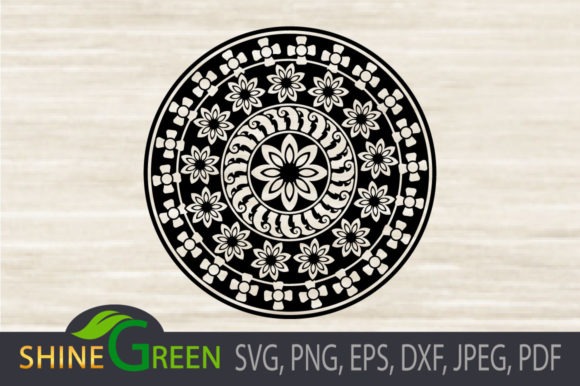
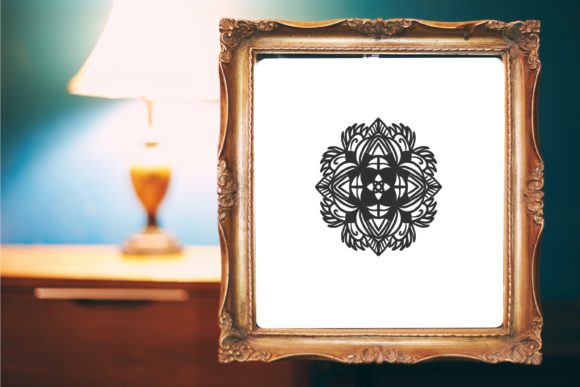
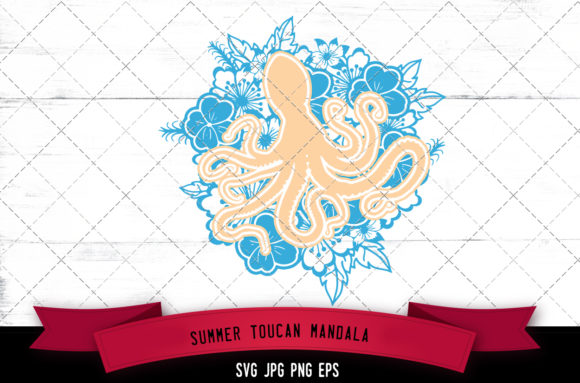
The intersection of marine biology and botanical illustration creates a unique niche in surface pattern design, and the Tropical Floral Octopus Mandala represents a specific convergence of these themes. For designers, educators, and content creators, this asset is not merely a decorative image but a functional tool built for versatility. The design features a stylized cephalopod integrated with tropical flora, arranged in a radial symmetry that defines the mandala aesthetic. What distinguishes this particular resource from generic clip art is its technical delivery: it is provided as a pure black silhouette across four distinct file formats. This deliberate simplicity transforms the graphic from a static picture into a foundational element for recoloring, masking, and vector manipulation.
In professional creative environments, the utility of an asset often depends more on its editability than its initial visual appeal. A full-color, flattened JPEG limits application, whereas a high-contrast silhouette invites modification. This Tropical Floral Octopus Mandala serves as a blank canvas. Whether you are a freelance logo designer needing a quick conceptual mark or a nursery product creator developing a new textile line, the monochromatic nature of this file set ensures it adapts to your brand palette rather than dictating it. Understanding the practical implications of this format is essential for maximizing return on investment and streamlining production timelines.
Technical Specifications and Format Utility
The inclusion of PNG, SVG, EPS, and JPG files addresses the fragmented nature of modern design software and output requirements. Each format serves a distinct purpose within a professional workflow, and recognizing when to deploy each is key to maintaining quality.
- SVG (Scalable Vector Graphics): This is arguably the most valuable file in the package for digital-first projects. As an XML-based vector format, the SVG allows for infinite scaling without pixelation. For web designers using this Tropical Floral Octopus Mandala as a site icon or background element, the SVG keeps page load times low while retaining crisp edges on retina displays. It also allows for CSS-based color changes directly in the browser, eliminating the need to re-export assets for every color variation.
- EPS (Encapsulated PostScript): While similar to SVG, EPS remains the industry standard for print production and legacy vector software like Adobe Illustrator or CorelDRAW. When preparing wedding invitations or large-format wall art, the EPS file ensures that the curves of the octopus tentacles and floral petals remain mathematically precise. This format is essential for commercial printing where color separation and spot varnishes might be applied.
- PNG (Portable Network Graphics): Provided with a transparent background, the PNG is the workhorse for composite design. If you are creating stickers, t-shirt transfers, or digital greeting cards, this file allows you to drop the silhouette onto any colored background instantly. The transparency data preserves the intricate negative space within the mandala, which is often lost if one attempts to manually remove a white background from a JPG.
- JPG (Joint Photographic Experts Group): While typically associated with photography, a high-resolution black-and-white JPG serves as a universal reference or proofing file. It is compatible with virtually every device and software, making it useful for client mockups, teaching resources, or quick social media posts where vector support is unavailable.
Practical Applications Across Industries
The radial symmetry and organic subject matter of the Tropical Floral Octopus Mandala make it exceptionally adaptable. However, its value proposition varies significantly depending on the end use. Professionals should evaluate the asset based on specific project parameters.
Branding and Logo Design
For marketers and brand identity specialists, mandalas offer a sense of balance and complexity that simple geometric shapes lack. The octopus motif adds a layer of intelligence, fluidity, and adaptability to the symbolism. Because this asset is a silhouette, it functions effectively as a logomark for businesses related to ocean conservation, yoga studios, bohemian retail, or educational platforms. The ability to recolor the black shape means a single purchase can yield multiple brand variations for different sub-brands or seasonal campaigns without additional licensing or design fees.
Print-on-Demand and Merchandise
Entrepreneurs in the POD space face the challenge of creating designs that look good on various garment colors. A solid black silhouette is the safest bet for light-colored fabrics, but the vector files allow for easy inversion or duotone treatments for dark apparel. The intricate details of the tropical flowers provide enough visual texture to prevent the design from looking flat on fabric. Furthermore, the seamless nature of mandala designs makes them suitable for all-over print patterns when tiled correctly in textile design software.
Educational and Therapeutic Resources
Educators and therapists utilize mandalas for focus exercises, art therapy, and cultural studies. The Tropical Floral Octopus Mandala offers a secular, nature-focused alternative to religious iconography. Teachers can use the uncolored version as a coloring sheet for fine motor skill development or as a base for biology lessons discussing marine ecosystems and plant life. The high contrast aids visibility for younger students or those with visual processing differences, while the complexity engages older demographics.
Assessing Quality and Workflow Integration
When integrating stock silhouettes into professional work, several quality benchmarks must be met. Based on the characteristics of this file set, users should anticipate specific strengths and potential limitations.
Edge Fidelity: In vector formats (SVG/EPS), the anchor points defining the octopus tentacles and flower petals should be smooth. Poorly digitized silhouettes often exhibit jagged edges or unnecessary nodes that complicate editing. Assuming standard professional digitization, this asset should allow for node reduction and path simplification if you need to reduce file size for embroidery or laser cutting. Always inspect the vector paths upon opening; clean topology saves hours of cleanup time.
Negative Space Clarity: A mandala relies on the relationship between positive and negative space. In a black silhouette, the internal details must be sufficiently spaced to remain legible at smaller sizes. For applications like business cards or favicon usage, test the Tropical Floral Octopus Mandala at reduced scales. If the floral details merge into a solid blob, the design may require simplification for micro-applications, though it will likely perform excellently at medium to large scales.
Recoloring Efficiency: Since the primary selling point is easy recoloring, verify that the black fill is a single, unified object or properly grouped layers. Disjointed paths can make global color changes tedious. A well-constructed silhouette allows for one-click fill changes in Illustrator, Affinity Designer, or Canva, significantly accelerating the iteration process for client presentations.
Audience Fit and Strategic Considerations
Not every project requires a tropical cephalopod mandala. Determining fit prevents wasted budget and storage. This asset is best suited for professionals who value potential over finality. If you need a photorealistic octopus for a scientific journal, this stylized silhouette is inappropriate. However, if you are building a cohesive visual system for a beach resort's wedding packages, this asset bridges the gap between thematic relevance and graphic flexibility.
Freelancers and agency owners will find the multi-format delivery reduces friction. There is no need to request source files or convert formats mid-project. The consistency across PNG, SVG, EPS, and JPG ensures that whether you are designing a website header or a physical scrapbook page, the visual weight and proportions remain identical. This reliability is crucial for maintaining brand consistency across mixed-media campaigns.
Small business owners creating their own marketing materials benefit from the "black silhouette" constraint. It removes the guesswork regarding color harmony. By treating the mandala as a structural element rather than a finished illustration, non-designers can achieve professional results by simply applying their existing brand hex codes to the shape. This democratizes high-end design aesthetics for those without advanced illustration skills.
Long-Term Value and Asset Management
Digital assets depreciate if they are too trendy or technically obsolete. The Tropical Floral Octopus Mandala possesses longevity due to its classic composition. Mandalas have been used in design for centuries, and marine life remains a perennial favorite in coastal and nursery markets. Unlike hyper-specific meme references or dated gradient styles, this silhouette is stylistically neutral enough to remain relevant through shifting design trends.
From an archival perspective, possessing both raster and vector versions future-proofs the asset. Software standards change; having an EPS ensures compatibility with future industry tools, while the PNG guarantees immediate usability in consumer-grade apps. For serious hobbyists and professionals alike, organizing this asset with clear metadata tags—such as "ocean," "botanical," "symmetry," and "silhouette"—will ensure it remains discoverable in your library years from now.
Ultimately, the decision to utilize this Tropical Floral Octopus Mandala should be driven by workflow efficiency and application breadth. It is a specialized yet flexible component that solves specific problems in recoloring, scaling, and thematic styling. By leveraging the distinct advantages of each included file type, creators can extract significant value across diverse projects, from digital interfaces to tangible crafts, ensuring the asset earns its place in a curated professional toolkit.